(303) 933-8230

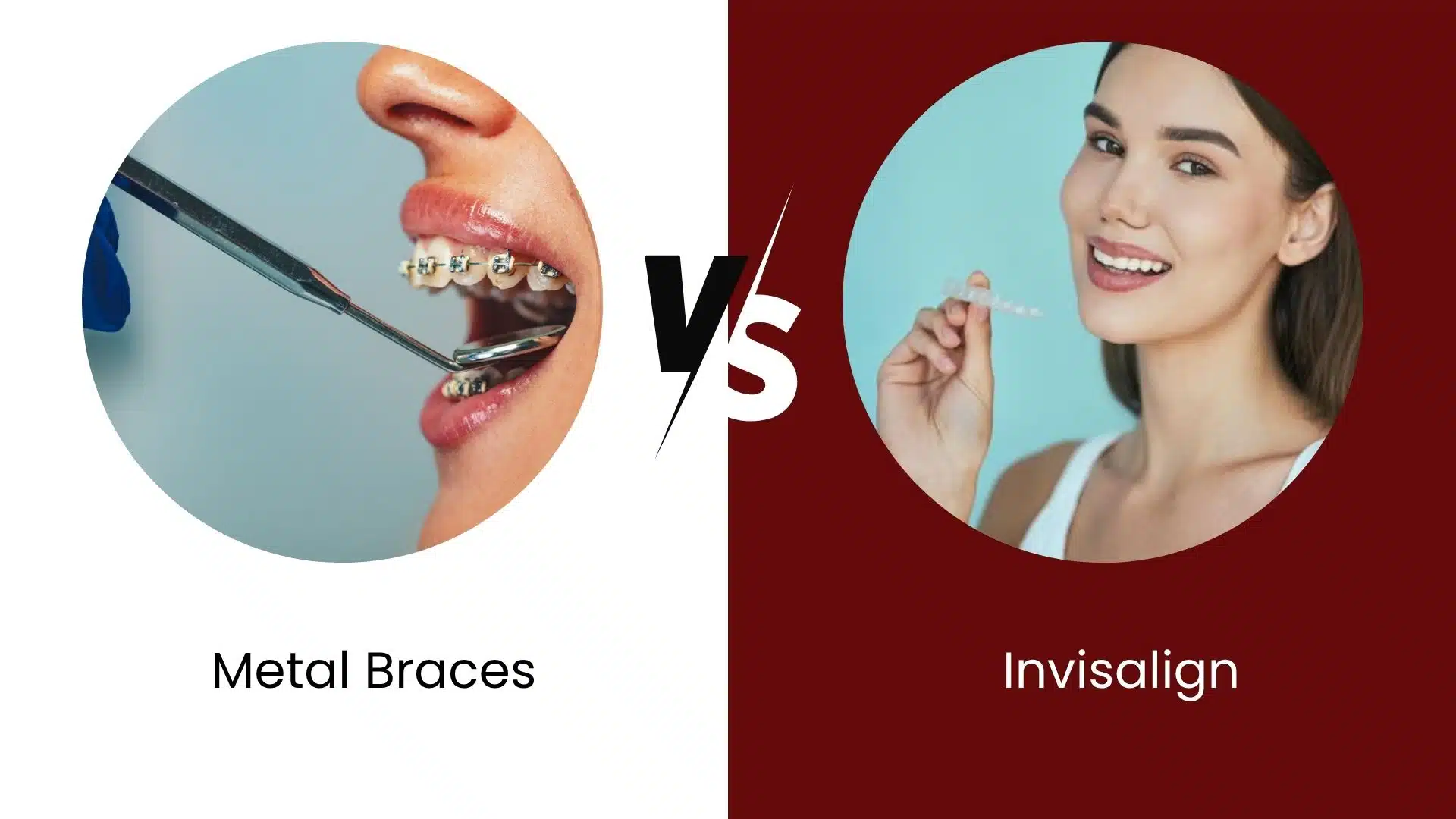
If you’ve been told you need orthodontic treatment, one of the first questions you’re probably asking is metal braces vs. Invisalign — which one is actually right for me? Both options can correct a bad bite and straighten crowded or gapped teeth, but they work differently, look different day to day, and fit different lifestyles. At Red Rocks Family Dentistry in Littleton, we walk patients through this decision regularly, and the honest answer is: it depends on your bite, your goals, and how you want to experience treatment.
This guide breaks down how each option works, where each one shines, and how to think through the decision before your consultation.
What Are Metal Braces?
Traditional metal braces are a form of fixed orthodontics. Individual brackets are bonded to each tooth, and a thin archwire connects them, applying steady pressure that gradually guides teeth into alignment. An orthodontic provider adjusts the wire at routine appointments to keep that pressure moving in the right direction.
Metal braces remain one of the most affordable and time-efficient options, particularly for severe malocclusion (a bad bite where the teeth don’t fit together correctly). Because they’re bonded in place, there’s no risk of losing or forgetting to wear an appliance — the treatment works continuously, which is part of why they’re still a go-to for complex cases.
Ceramic and clear brackets offer a less visible alternative to metal, though ceramic brackets can be prone to staining, and clear brackets tend to cost more and are more susceptible to damage. Patients who want fixed braces but prefer a lower profile sometimes also ask about lingual braces, which bond to the back of the teeth rather than the front.
What Is Invisalign?
Invisalign is a removable clear aligner system — a series of custom trays that gradually reposition teeth. Each set of aligners is typically worn for about two weeks before being swapped for the next tray in the series, with each new tray nudging teeth slightly closer to their final position.
Because the trays are removable, patients can take them out to eat, brush, floss, and attend social or professional events. That flexibility is a major draw, but it comes with a catch: Invisalign only works if it’s worn consistently. Trays need to stay in for the recommended hours each day to keep treatment on schedule. Invisalign is generally best suited to minor-to-moderate alignment issues rather than severe bite problems. Other removable clear aligner brands, including ClearCorrect and MTM® Clear Aligner, work on a similar principle.
Metal Braces vs. Invisalign: Key Differences
Treatment Control Metal braces stay on your teeth around the clock, so treatment isn’t dependent on remembering to wear anything. Invisalign requires discipline — the trays only move teeth when they’re actually in your mouth.
Appearance Metal braces are the most visible option, though ceramic or clear brackets reduce that visibility. Invisalign trays are clear and far less noticeable, which is why many adults and image-conscious teens lean toward aligners.
Eating and Oral Hygiene With fixed braces, certain sticky or hard foods need to be avoided, and brushing/flossing takes extra care around brackets and wires. Invisalign trays come out for meals and cleaning, which many patients find simpler day to day.
Case Complexity Severe malocclusions, significant crowding, or complex bite corrections are often better addressed with fixed braces. Milder spacing or alignment issues are usually good candidates for Invisalign.
Commitment Level Braces require less patient follow-through since they aren’t removable. Invisalign asks more of the wearer — consistent wear time is what makes the treatment succeed.
Who Is a Good Candidate for Each Option?
There’s no universal “better” choice — it comes down to your specific bite and how you want to live during treatment.
Metal braces tend to be recommended when:
- The malocclusion is moderate to severe
- Significant tooth movement or bite correction is needed
- A patient (especially a younger one) may not reliably wear a removable appliance
Invisalign tends to be recommended when:
- Alignment issues are minor to moderate
- A patient wants a discreet, removable option
- Daily routines like eating out, playing an instrument, or public speaking make a fixed appliance less appealing
The only way to know for certain which category you fall into is a clinical evaluation, since bite complexity varies significantly from patient to patient.
Making the Right Choice for Your Smile
For patients throughout Littleton — including families in Columbine, Bow Mar, Governor’s Ranch, and Ken Caryl — the decision between metal braces and Invisalign usually comes down to a conversation with your dental team about your bite, your timeline, and your day-to-day preferences. Both paths lead to the same destination: a straighter, healthier smile that functions better and looks the way you want it to.
If you’re still weighing metal braces vs. Invisalign, the most productive next step is an orthodontic consultation, where your teeth and bite can be evaluated in person before any recommendation is made.
FAQs
Q: Is Invisalign as effective as metal braces?
A: For minor to moderate alignment issues, Invisalign can be just as effective as metal braces. For severe malocclusions or complex bite corrections, fixed metal braces are often the more reliable option. A clinical evaluation determines which is best for your specific case.
Q: How long does Invisalign treatment take compared to metal braces?
A: Treatment time depends on the complexity of the case rather than the appliance alone. Aligner trays are typically changed roughly every two weeks, with total treatment length determined by how much movement is needed.
Q: Can adults get metal braces, or is Invisalign the only adult option?
A: Adults can absolutely get metal braces — orthodontic treatment isn’t limited to teens. Many adults choose Invisalign for its discreet appearance, but metal, ceramic, or clear brackets remain effective options at any age.
Q: Do I have to wear Invisalign trays all day?
A: Yes — Invisalign only works when trays are worn consistently. Because they’re removable, results depend on the wearer’s commitment to keeping them in for the recommended daily hours.
Q: What foods should I avoid with metal braces?
A: Sticky, hard, or chewy foods can damage brackets and wires and should generally be avoided or eaten with extra care. Invisalign avoids this issue entirely since trays are removed before eating.