(303) 933-8230

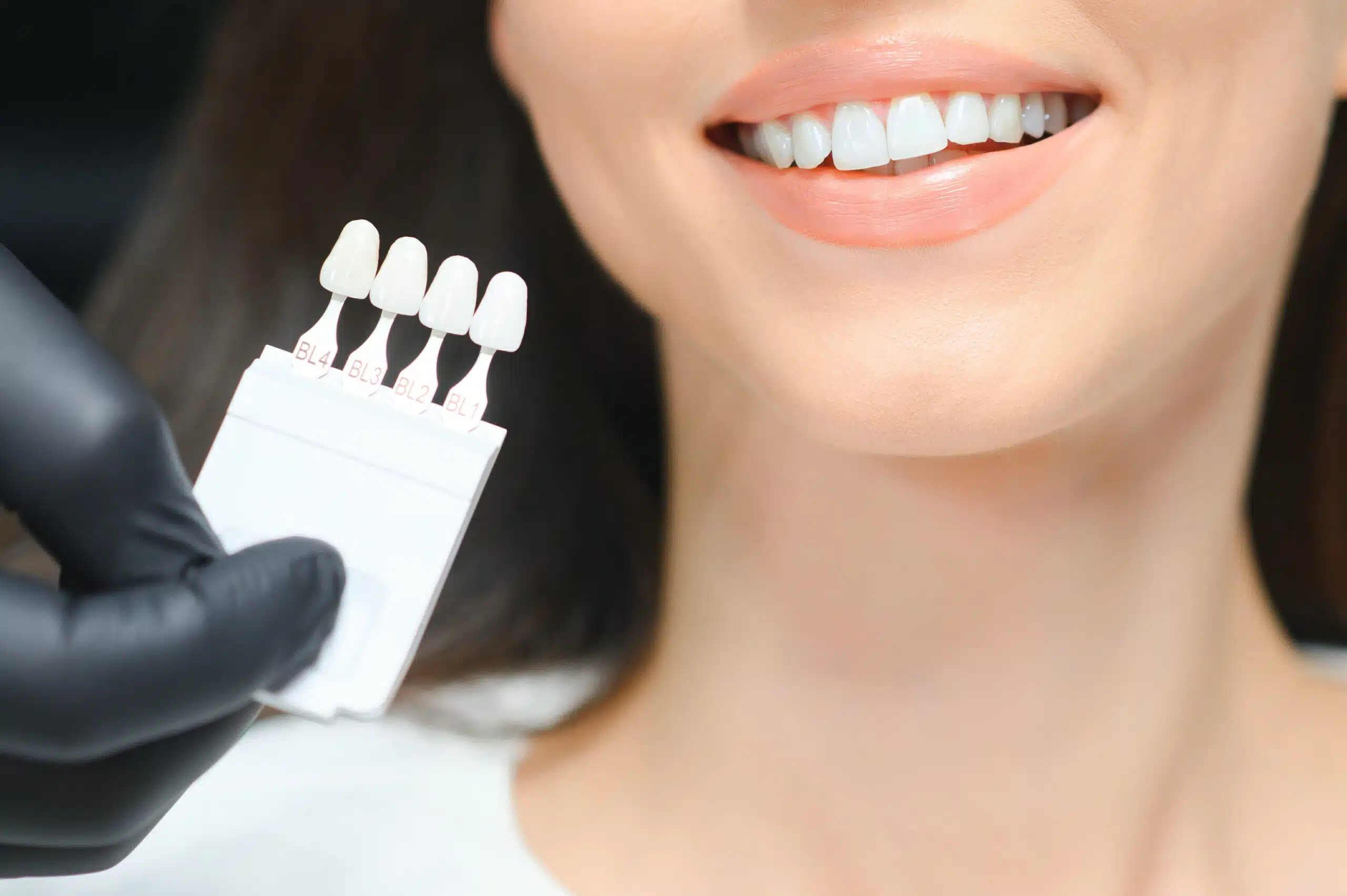
Choosing the right crown and veneer shades requires more than selecting the whitest available tab. Dentists assess the natural tooth, surrounding teeth, lighting, restoration material, and underlying tooth structure. If you are considering cosmetic treatment, Red Rocks Family Dentistry provides cosmetic dentistry in Littleton with treatment planning based on your individual smile and restorative needs.
How do dentists determine the starting tooth shade?
Dentists first evaluate the color of the natural tooth and nearby teeth before selecting a restoration shade.
A dentist may use a standardized shade guide, such as VITA Classical or VITA 3D-Master, to identify a suitable starting point. Shade selection considers more than brightness. Dental color is generally evaluated through characteristics such as value, chroma, and hue.
The shade is usually assessed against adjacent teeth that will remain visible. This is especially important when only one crown or veneer is being placed.
Research shows that shade selection can vary between observers. Studies have also found differences between visual shade matching and instrumental methods. This is why careful clinical assessment remains important.
Why does lighting matter when selecting a dental shade?
Lighting affects how tooth color is perceived, so shade selection should use controlled, suitable illumination rather than relying on one lighting condition.
Natural daylight and dental operatory lighting can produce different visual impressions. Artificial lighting can also influence how a shade tab appears beside the tooth.
The dentist therefore assesses the tooth under appropriate clinical lighting and avoids relying on a single visual condition. The goal is to reduce the effect of environmental color on the selected restoration shade.
A study evaluating crown shade selection found that controlled artificial lighting produced different matching results from ordinary daylight. This supports using consistent lighting during shade assessment.
What characteristics of a tooth affect crown and veneer color?
Tooth color depends on several optical characteristics, including brightness, chroma, hue, translucency, and the way light interacts with enamel and dentin.
Natural teeth are not a single uniform color. The cervical, middle, and incisal areas can have different optical characteristics.
The restoration must reproduce an appropriate overall appearance while maintaining the natural variation visible in the surrounding teeth. This is particularly relevant for front teeth, where small differences can be more noticeable.
For ceramic restorations, the final appearance can also depend on ceramic thickness and translucency. Research on lithium-disilicate crowns found that substrate color, ceramic thickness, translucency, and cement shade can all influence the final color.
How do dentists match a veneer to the surrounding teeth?
Dentists compare the planned veneer with the adjacent natural teeth and select a shade that fits the existing tooth color and the planned cosmetic result.
Veneers cover only the facial surface of a tooth, so the underlying tooth color can influence the final appearance. The selected ceramic and its thickness also affect how light passes through the restoration.
The dentist may communicate the selected shade and additional color information to the dental laboratory. Photographs and other records can help the laboratory reproduce the planned appearance.
The American Dental Association notes that veneer treatment includes selecting an appropriate color shade to match the natural teeth. The dentist also evaluates the fit and shape before bonding the veneer.
For patients considering veneers, Red Rocks Family Dentistry also discusses common questions about dental veneers and their treatment process.
How does the underlying tooth affect a crown shade?
The underlying tooth or preparation can change the appearance of a ceramic crown because light can interact with the restoration and the substrate beneath it.
This factor becomes important when a crown is placed over a darkened, discolored, or previously treated tooth.
Research on lithium-disilicate crowns found that substrate color affected the measured final color. Ceramic thickness and translucency also affected the result.
For this reason, the dentist and dental laboratory may need information about the prepared tooth, not only the desired final shade. The laboratory can then select materials and fabrication characteristics appropriate to the clinical situation.
Can dental cement change the final veneer or crown shade?
Yes, the shade and optical properties of dental cement can influence the final appearance of some ceramic restorations.
This effect is particularly relevant to thin or translucent restorations. Cement color can interact with the ceramic and the underlying tooth.
A study of lithium-disilicate crowns found that cement shade influenced the measured color, although its effect was weaker than several other tested factors. The American Dental Association has also reported research showing that cement translucency can affect the final color of esthetic restorations.
The dentist therefore considers the restoration material, thickness, translucency, and cement when planning the final appearance.
Do dentists use digital devices to match crown and veneer shades?
Some dental practices use digital shade-matching devices to supplement visual shade selection and provide objective color measurements.
Digital systems can measure color using spectrophotometric or colorimetric principles. These measurements can provide numerical information rather than relying entirely on visual judgment.
However, digital measurement does not eliminate every source of color variation. The restoration itself can differ from the shade tab because of ceramic composition, thickness, surface characteristics, and fabrication conditions.
Clinical research has evaluated spectrophotometers and other instrumental systems as alternatives or supplements to visual shade guides. Evidence supports their usefulness, but shade matching remains a multifactorial process.
Should teeth be whitened before choosing a crown or veneer shade?
If whitening is planned, the final restoration shade is generally selected after the natural teeth reach the intended color.
Whitening changes the color of natural enamel but does not whiten existing crowns, veneers, or fillings. The American Dental Association states that whitening does not change the color of these restorations.
This creates an important treatment-planning consideration. If a patient wants both whitening and a new visible crown or veneer, the dentist can determine the intended natural tooth shade before the definitive restoration is fabricated.
Red Rocks Family Dentistry also provides teeth whitening in Littleton and explains that existing restorations may need to be replaced if their shade no longer matches the newly whitened natural teeth.
How do dentists verify the final crown or veneer shade?
Dentists verify the restoration against the surrounding teeth before final placement or bonding and can assess fit, shape, surface characteristics, and color together.
The restoration is evaluated in the mouth because the final appearance depends on the clinical environment. For a veneer, the dentist also checks the fit and shape before bonding.
Shade matching is not limited to the shade code printed on a laboratory prescription. The material, thickness, translucency, preparation color, cement, lighting, and surface characteristics can all affect the result.
This explains why two restorations made from the same nominal shade may not appear completely identical. Clinical research has documented measurable color differences between shade tabs and fabricated ceramic crowns.
What should you discuss with a cosmetic dentist before choosing a shade?
Discuss your desired tooth color, existing restorations, planned whitening, restoration material, and the number of teeth being treated before the final shade is selected.
The treatment plan should account for the teeth that will remain visible beside the restoration. It should also consider whether future cosmetic treatment could change the surrounding natural tooth color.
A consultation with a cosmetic dentist in Littleton can help determine whether crowns, veneers, whitening, bonding, or another cosmetic approach fits the condition of the teeth and the intended result.
For treatment planning or questions about crown and veneer shade selection, you can contact Red Rocks Family Dentistry or request an appointment through the practice.
FAQs
How are crown and veneer shades selected?
Dentists compare the natural teeth with standardized shade guides and consider lighting, tooth structure, restoration material, translucency, and cement.
Can a crown be made to match natural teeth?
Yes, a crown can be fabricated to closely coordinate with adjacent teeth using clinical shade selection and laboratory communication.
Should I whiten my teeth before getting veneers?
If whitening is planned, it is generally better to establish the desired natural tooth shade before the definitive veneer shade is selected.
Can veneers be whiter than natural teeth?
Yes, veneers can be designed in a lighter shade, but the selected color should account for the surrounding natural teeth and the planned smile design.
Does cement affect veneer or crown color?
Yes, cement shade can influence the final appearance of some translucent ceramic restorations, particularly when restoration thickness is limited.