(303) 933-8230

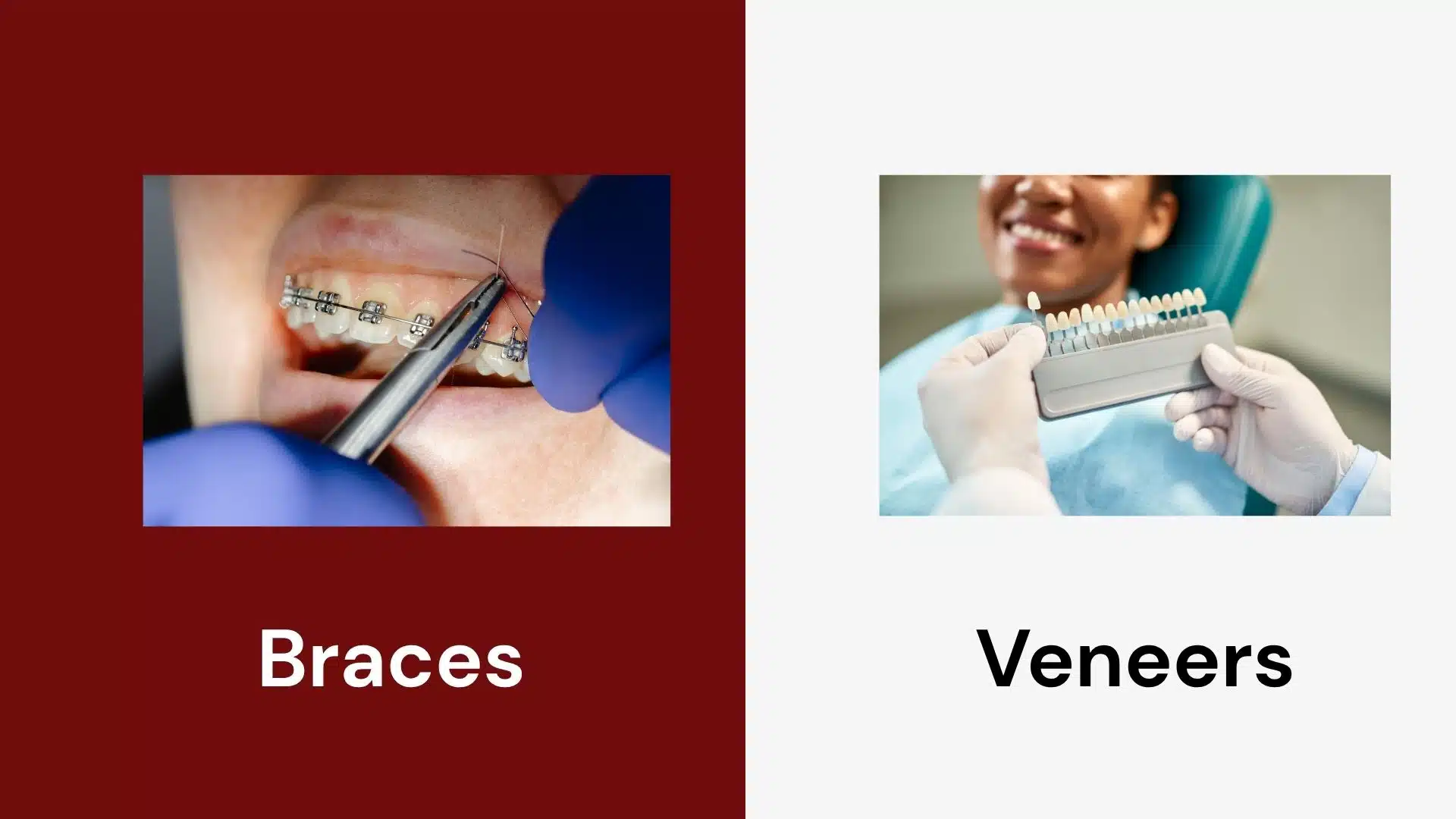
Crooked teeth can be treated with orthodontic braces or, in selected cases, cosmetic veneers. Braces correct tooth positions, while veneers cover the front surfaces of teeth to change their appearance. The right choice depends on the severity of misalignment, bite function, enamel condition, and long-term treatment goals. Red Rocks Family Dentistry’s types of braces and orthodontic treatment options provide a starting point for understanding orthodontic care.
What is the difference between braces and veneers for crooked teeth?
Braces gradually move natural teeth into improved positions, whereas veneers change the visible shape and appearance of teeth without correcting their underlying positions.
Braces use brackets and wires or another orthodontic appliance to apply controlled pressure. Treatment can address crowding, spacing, and certain bite problems. The duration depends on the complexity of the case and the patient’s response to treatment.
Veneers are thin coverings bonded to the front surfaces of teeth. Common materials include porcelain and dental composite resin. They can make mildly uneven or differently sized teeth appear more uniform, but they do not reposition the roots or correct the underlying bite.
The distinction matters because teeth can look straighter without being properly aligned. A cosmetic improvement does not necessarily resolve a functional orthodontic problem.
When are braces the better choice for crooked teeth?
Braces are generally the more appropriate option when crooked teeth require actual movement, significant crowding correction, or improvement in the bite.
An orthodontist evaluates the alignment of the upper and lower teeth, jaw relationships, and available space before recommending treatment. Braces may be suitable for:
- Moderate or severe crowding, where teeth overlap because space is limited.
- Noticeable gaps, where orthodontic movement can improve spacing.
- Overbites, where the upper front teeth extend too far over the lower teeth.
- Underbites, where the lower front teeth sit ahead of the upper front teeth.
- Crossbites, where some upper teeth bite inside the lower teeth.
- Rotated teeth, where individual teeth turn out of their normal positions.
Not every bite problem can be corrected with braces alone. Some cases require additional orthodontic appliances or, in severe skeletal cases, a more comprehensive treatment plan.
Braces also preserve the natural tooth structure when treatment does not require other dental procedures. However, patients must maintain careful oral hygiene to reduce the risk of cavities, gum inflammation, and white spots around brackets.
When can veneers improve the appearance of crooked teeth?
Veneers may be appropriate for mild cosmetic irregularities when the bite is healthy and enough suitable enamel remains to support the restoration.
For example, veneers may improve the appearance of slightly uneven front teeth, small gaps, minor differences in tooth shape, or discoloration that does not respond adequately to whitening.
Porcelain veneers are laboratory-made restorations. Composite veneers use tooth-colored resin applied directly or indirectly to the tooth. The best material depends on the clinical condition, desired appearance, and treatment plan.
Veneers are not a substitute for orthodontic treatment when substantial tooth movement is necessary. Placing them on significantly misaligned teeth may require excessive removal of healthy enamel or create restorations with unsuitable contours.
Traditional porcelain veneers commonly involve some irreversible enamel removal. Composite veneers may require less preparation in selected cases, but suitability varies. Both types need professional assessment, and neither should be chosen solely because the treatment appears faster.
How long do braces and veneers take?
Veneers generally require fewer treatment visits than comprehensive braces, but braces address tooth position while veneers primarily change appearance.
The following estimates provide general planning guidance, not a guaranteed treatment schedule.
| Factor | Braces | Veneers |
|---|---|---|
| Treatment duration | Often about 18–24 months for comprehensive treatment; some cases take less or more time | Commonly several visits for porcelain veneers; direct composite treatment may take fewer visits |
| Main purpose | Move teeth and improve alignment | Change visible tooth shape, color, and proportions |
| Tooth preparation | Usually does not require enamel removal solely to move teeth | May require permanent enamel removal |
| Maintenance | Brushing, professional dental care, and adjustment visits | Routine hygiene, restoration monitoring, and possible repair or replacement |
| After treatment | Retainers help maintain tooth positions | Veneers require ongoing care and do not prevent natural tooth movement |
The American Association of Orthodontists explains that orthodontic treatment time varies according to individual needs. Veneer appointments also depend on the material, number of teeth, laboratory requirements, and whether preliminary treatment is needed.
How much do braces and veneers cost?
The cost depends on treatment complexity, the appliance or veneer material, the number of teeth involved, and the dental practice’s fees.
Braces may involve an initial examination, diagnostic records, appliance placement, periodic visits, and retainers. Veneer fees generally depend on the number of restorations, material selection, laboratory work, and any necessary preliminary procedures.
There is no single reliable price for every patient in Littleton, Colorado. Request a written estimate that identifies what the quoted fee includes.
Dental insurance may cover some medically necessary orthodontic treatment under the patient’s specific plan, subject to exclusions, age limits, and lifetime maximums. Veneers are commonly classified as cosmetic treatment and are often not covered, although plan terms determine the actual benefit.
Cost should be assessed alongside durability, maintenance, biological effects, and the possibility of future treatment. A lower initial fee does not necessarily mean a lower lifetime cost.
What risks should you consider before choosing braces or veneers?
Braces carry risks associated with orthodontic movement and plaque buildup, while veneers may involve irreversible enamel removal and future repair or replacement.
Braces require consistent cleaning around brackets and wires. Inadequate oral hygiene can contribute to tooth decay, gum inflammation, and enamel decalcification. Retainers are also important after treatment because teeth can shift after braces are removed. The American Association of Orthodontists explains that treatment and retention requirements vary by individual.
Veneers can chip, crack, loosen, or wear over time. Teeth grinding, an unfavorable bite, untreated decay, and gum disease can affect their suitability. The American Dental Association’s guide to dental veneers explains that veneer treatment is generally irreversible when enamel must be removed.
A dental examination should establish whether the teeth and gums are healthy enough for the proposed treatment. Patients with significant crowding or bite problems should have those issues assessed before committing to cosmetic restorations.
How should you choose between braces and veneers in Littleton, CO?
Choose treatment according to whether the primary problem is tooth position or tooth appearance, after a dentist or orthodontist evaluates your bite and oral health.
Use these questions to guide the consultation:
- Do the teeth need to move, or are minor shape changes sufficient?
- Is there a bite problem that requires orthodontic correction?
- How much natural enamel would veneer preparation remove?
- What are the expected treatment time, total cost, and maintenance requirements?
- Could orthodontic treatment followed by limited cosmetic work provide a more conservative result?
For patients exploring cosmetic improvements, Red Rocks Family Dentistry’s cosmetic dentistry services explain options for improving the appearance of teeth. The appropriate plan depends on individual clinical findings.
If you are comparing braces and veneers for crooked teeth, schedule an evaluation and visit Red Rocks Family Dentistry in Littleton. Ask which approach addresses the underlying problem while preserving as much healthy tooth structure as possible.
FAQs
Are braces better than veneers for severely crooked teeth?
Braces are generally more suitable for severely crooked teeth because they move teeth into improved positions rather than masking misalignment.
Can veneers make crooked teeth look straight?
Yes, veneers can improve the appearance of mildly misaligned teeth, provided the bite and tooth structure are suitable for treatment.
Are veneers faster than braces?
Veneers generally require less treatment time than comprehensive braces, but they do not provide the same tooth movement or bite correction.
Are braces or veneers more affordable?
The total cost depends on treatment complexity, the number of teeth involved, materials, insurance benefits, and future maintenance requirements.
Can you get veneers after braces?
Yes, veneers may be considered after orthodontic treatment when residual cosmetic concerns remain and the teeth are healthy enough for restorations.