(303) 933-8230

If you’ve been quietly wishing your teeth were straighter, but the idea of metal braces feels like a step backwards, you’re not alone. Clear aligners have become one of the most popular orthodontic options for both teens and adults — and for good reason. But before you decide, the real question is: are you actually a good candidate?
At Red Rocks Family Dentistry in Littleton, CO, our team helps patients figure out exactly that. Whether you’ve been told braces are your only option or you’re just starting to explore your choices, this guide will walk you through who benefits most from clear aligner therapy and what to realistically expect.
What Are Clear Aligners, Exactly?
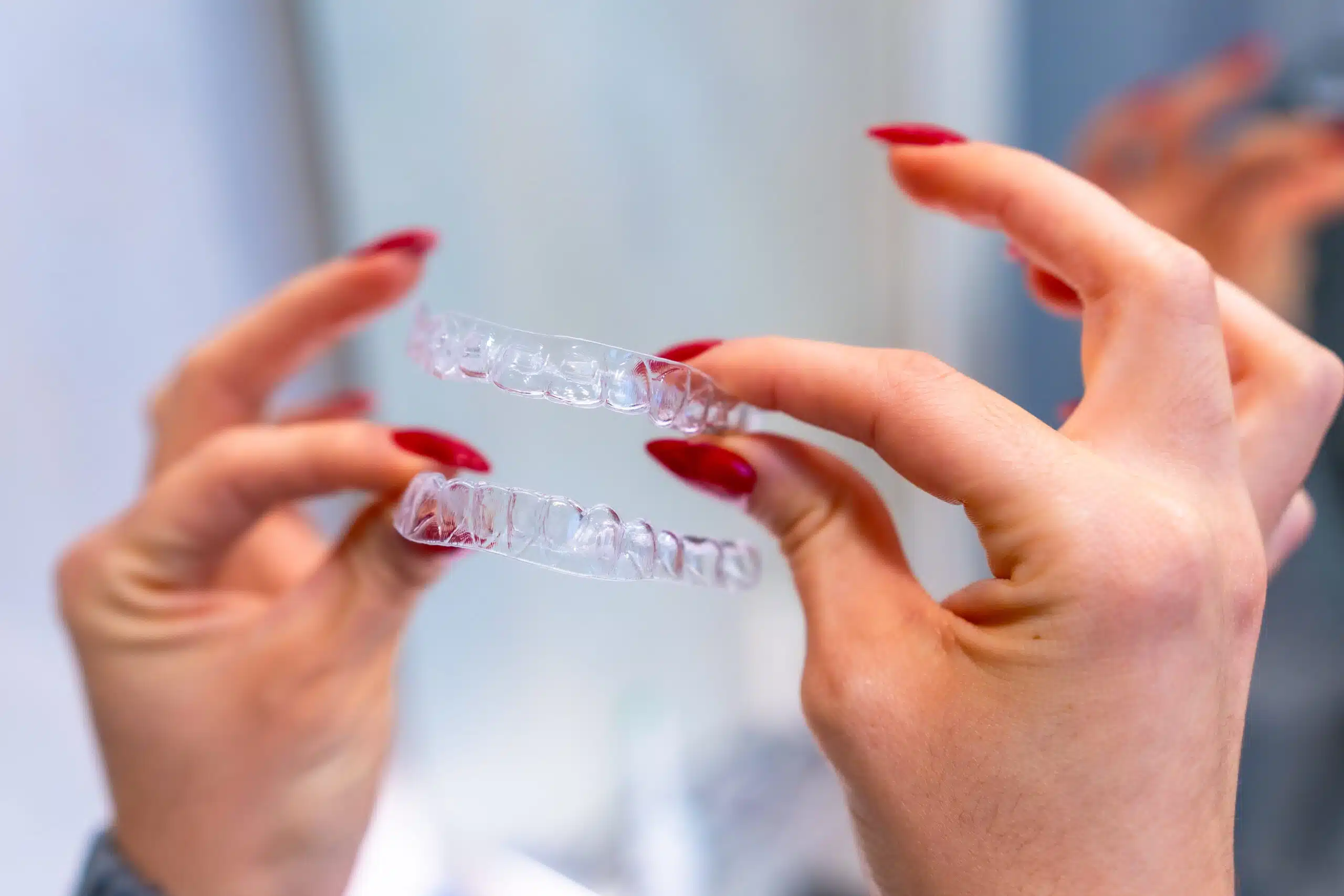
Clear aligners are a series of custom-made, removable plastic trays designed to gradually shift teeth into proper alignment. Each set of trays is worn for approximately one to two weeks before moving to the next set in the series. The treatment works by applying consistent, controlled pressure to specific teeth, moving them incrementally over time.
Unlike traditional braces, there are no brackets or wires involved. The trays are nearly invisible when worn and can be removed for eating, drinking, brushing, and flossing. For many patients, this makes them a far more practical and comfortable path to a straighter smile.
Who Is a Good Candidate for Clear Aligners?
Clear aligners are effective for a wide range of alignment issues, but they aren’t a one-size-fits-all solution. Here’s what typically makes someone a strong candidate:
Mild to Moderate Alignment Issues
Clear aligners work exceptionally well for:
- Crowded teeth — when teeth overlap due to insufficient space in the jaw
- Spacing issues — gaps between teeth that affect appearance or bite function
- Mild overbite or underbite — where the upper or lower teeth extend slightly beyond the other
- Crossbite — when some upper teeth sit inside the lower teeth
- Open bite — when upper and lower front teeth don’t make contact when biting down
For more complex bite problems or significant skeletal misalignment, traditional orthodontics may still be the recommended route. Your dentist will evaluate your specific situation before recommending any treatment.
Adults and Teens with Fully Erupted Permanent Teeth
Clear aligners are designed for patients whose permanent teeth have fully come in. They’re widely used by adults and older teens who want discreet orthodontic treatment without affecting their daily life. Younger children whose mouths are still developing are generally better served by other orthodontic approaches.
Patients Committed to Wearing Their Aligners
This one matters more than most people realize. Clear aligners need to be worn 20 to 22 hours per day to stay on track. If you’re likely to forget to put them back in after meals or leave them out for extended periods, the results will be delayed — or incomplete. Candidates who succeed with clear aligners are typically motivated and consistent.
Good Overall Oral Health
Before starting any orthodontic treatment, your teeth and gums need to be in good shape. Active cavities, gum disease, or untreated infections need to be addressed first. At Red Rocks Family Dentistry, we’ll assess your full oral health before recommending clear aligner therapy. Think of it as building on a solid foundation.
Who Might NOT Be the Best Fit?
Clear aligners have come a long way, but there are cases where they’re not the ideal tool:
- Severe malocclusion or jaw discrepancies — these often require more force and precision than aligners can deliver
- Teeth with very short crowns — aligners need enough surface area to grip and move teeth effectively
- Patients with certain dental restorations — large bridges or significant existing dental work can limit aligner effectiveness
- Young children — primary (baby) teeth and mixed dentition stages aren’t suitable for aligner treatment
None of these are permanent disqualifiers. In some cases, other preparatory work or a phased treatment approach can open up the possibility of clear aligners down the line.
What Does the Process Look Like?
If you’re a candidate, here’s a general overview of what to expect when starting clear aligner treatment at a dental practice like Red Rocks Family Dentistry:
- Initial consultation and oral exam — Your dentist evaluates alignment, bite, and overall oral health
- Digital impressions or scans — These create the precise 3D model your custom trays are built from
- Treatment plan review — You’ll see a projected outcome before committing to anything
- Aligner delivery and fitting — You receive your first set of trays and instructions
- Check-in appointments — Periodic visits ensure your teeth are moving as planned
- Refinements if needed — Minor adjustments are common toward the end of treatment
- Retainers — After active treatment, retainers maintain your new alignment long-term
Treatment timelines vary based on complexity, but many patients complete clear aligner therapy in 6 to 18 months.
Clear Aligners vs. Traditional Braces: A Quick Comparison
| Feature | Clear Aligners | Traditional Braces |
|---|---|---|
| Visibility | Nearly invisible | Noticeable metal |
| Removability | Yes | No |
| Dietary restrictions | Minimal (remove to eat) | Significant |
| Oral hygiene | Easier to brush/floss | More challenging |
| Best for | Mild–moderate cases | Moderate–severe cases |
| Commitment required | High (wear compliance) | Built-in (fixed) |
Neither option is universally “better” — the right choice depends on your specific bite, alignment, and lifestyle. Our orthodontics services at Red Rocks Family Dentistry cover both options, and we’ll guide you toward the one that’s actually going to work for your situation.
Why Patients in Littleton Choose Clear Aligners
For working adults, parents, and anyone who values a low-profile treatment experience, the appeal is clear. You can walk into a meeting, a dinner, or a date without anyone knowing you’re in the middle of orthodontic treatment. You can eat what you want. And you can keep your regular brushing and flossing routine without special tools.
That said, clear aligners aren’t a shortcut — they’re a commitment. The patients who get the best results are the ones who wear them consistently, show up to their check-in appointments, and follow through with retainers afterward.
Ready to Find Out If You Qualify?
The only way to know for certain whether clear aligners are right for you is to have a proper evaluation. An in-person consultation gives your dentist the full picture — your bite, spacing, oral health status, and goals — that no online quiz or self-assessment can replicate.
If you’ve been putting off looking into orthodontic treatment because you assumed it wasn’t for you, now is a good time to revisit that assumption. Many patients are surprised to find out they’re excellent candidates.
FAQs
Q: Can clear aligners fix an overbite?
A: Yes, clear aligners can correct mild to moderate overbites. Severe overbites with a skeletal component may require additional orthodontic interventions. Your dentist will determine what’s appropriate based on your specific bite evaluation.
Q: How long does clear aligner treatment take?
A: Treatment duration varies widely depending on the complexity of your case. Mild alignment issues may resolve in as few as 6 months, while more involved cases can take up to 18 months or longer.
Q: Do clear aligners hurt?
A: Some patients experience mild pressure or soreness when switching to a new set of trays, especially in the first day or two. This is normal and typically fades quickly. It’s a sign the trays are working.
Q: What happens if I don’t wear my aligners enough?
A: Insufficient wear time slows or stalls tooth movement. If aligners aren’t worn 20–22 hours per day, your teeth won’t progress through the treatment plan as designed, potentially extending your overall treatment time.
Q: Are clear aligners covered by dental insurance?
A: Many dental insurance plans that include orthodontic benefits will contribute to clear aligner treatment, though the coverage amount varies by plan. It’s worth contacting your insurance provider directly and asking your dental office about flexible payment options.